

Goal setting is a cornerstone of success in sport and life, widely recognised as a powerful tool for enhancing performance and motivation1…. While many are familiar with the SMART (Specific, Measurable, Achievable, Realistic, Time-bound) acronym, the world of sport psychology offers far more nuanced and effective methodologies for optimising your goals.
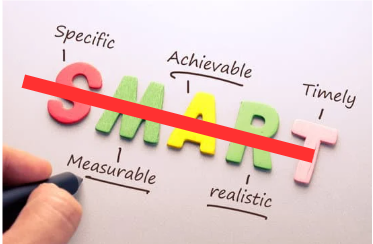
The Limitations of Relying Solely on SMART Goals
Despite its popularity, the SMART heuristic has several drawbacks when applied to sport. It is not based on scientific theory and often encourages ‘achievable/realistic’ goals, which may contradict the empirical evidence suggesting that challenging/difficult goals lead to optimal outcomes. In fact, research indicates that specific goals are not always superior to more vague goals for improving performance, especially for those new to a task. The SMART acronym also doesn’t consider different types of goals such as learning or performance goals, which can lead to vastly different results. Its inconsistent application and redundant criteria further highlight its limitations.

Going Beyond SMART: Advanced Goal Setting Approaches
To truly unlock potential, a more sophisticated, evidence-based approach is needed. Here are some advanced methodologies:
Performance Goals: Focused on achieving specific task outcomes or improving one’s own standards (e.g., a swimmer aiming for a personal best time). These generally lead to positive performance outcomes and can reduce anxiety and increase confidence.
Learning Goals: Focused on developing new strategies or mastering a complex task (e.g., identifying new strategies to improve a skill). These are particularly suited for inactive individuals or those learning a new, complex skill. Learning goals have been found to enhance self-efficacy, intrinsic interest, and satisfaction more than other goal types.
Process Goals: Focusing on the actions or techniques needed to perform a skill (e.g., a swimmer focusing on stroke count per length). These have shown the largest effect on performance and self-efficacy compared to performance and outcome goals.
Outcome Goals: Focused on the end result or outcome of a competition (e.g., winning a race). These have been found to have little effect on performance when set in isolation and can increase anxiety due to lack of controllability but can work in conjunction with performance and process goals.
Mental Contrasting with Implementation Intentions (MCII): This technique involves vividly imagining a desired future, contrasting it with current obstacles, and then developing “if-then” plans to overcome these obstacles. This metacognitive strategy has been shown to facilitate goal attainment.

The Pros and Cons of Goal Setting
Pros:
• Performance Enhancement: Goal setting consistently shows a positive effect on sport performance.
• Increased Motivation and Persistence: Goals direct effort, energise individuals, and foster persistence towards goal pursuit.
• Enhanced Self-Efficacy and Confidence: Achieving goals, particularly process goals, can significantly boost self-efficacy and self-belief.
• Positive Psychological Outcomes: Goal setting can lead to increased enjoyment, satisfaction, and reduced anxiety. In youth facing mental health challenges, goals can evoke a sense of hope, purpose, and productivity.
• Structure and Direction: Goals provide a clear structure and action plan, helping individuals to push through difficult times.
Cons:
• Risk of Negative Psychological Consequences: Setting high and specific goals inherently carries a high risk of failure. Failure can lead to decreased affect (negative emotions), lower self-esteem, reduced motivation, and a reluctance to engage in new challenges.
• Stress, Anxiety, and Perceptions of Failure: Inappropriately set goals can induce stress, anxiety, and a feeling of failure.
• Unethical Behaviour: An intense focus on achieving goals, especially when tied to rewards, can sometimes narrow attention to the point where ethical standards are overlooked, leading to lying or cheating.
• Detrimental for Inactive Individuals: For those who are not very active, SMART goals have been shown to lead to less physical activity, lower enjoyment, and increased pressure compared to more open goals.
• Goal Disengagement: Persisting with unattainable goals can be detrimental, and knowing when to adjust or disengage from a goal is an adaptive self-regulatory response.
In conclusion, while goal setting is undoubtedly a powerful tool, moving beyond the basic SMART acronym to embrace more sophisticated, theory-driven, and individualised approaches can lead to more consistent positive outcomes and mitigate potential downsides.
Contact Inside Edge Sport Psychology today to explore a tailored goal-setting strategy that truly elevates your performance and well-being.
• Bird, M. D., Swann, C., & Jackman, P. C. (2024). The what, why, and how of goal setting: A review of the goal-setting process in applied sport psychology practice. Journal of Applied Sport Psychology, 36(1), 75-97. DOI: 10.1080/10413200.2023.2185699
• Didion, L., Toste, J. R., Benz, S. A., & Shogren, K. A. (2021). How Are Self-Determination Components Taught to Improve Reading Outcomes for Elementary Students With or At Risk for Learning Disabilities? Learning Disability Quarterly, 44(4), 288-303. DOI: 10.1177/0731948721989328
• Höpfner, J., & Keith, N. (2021). The Dark Side of High and Specific Goals: The Effects of Goal-Failure on Affect, Self-Esteem, and Motivation. Frontiers in Psychology, 12, 704790. DOI: 10.3389/fpsyg.2021.704790
• Jeong, Y. H., Healy, L. C., & McEwan, D. (2023). The application of Goal Setting Theory to goal setting interventions in sport: a systematic review. International Review of Sport and Exercise Psychology, 16(1), 474-499. DOI: 10.1080/1750984X.2021.1901298
• Penno, J., Hetrick, S., & Christie, G. (2022). “Goals Give You Hope”: An Exploration of Goal Setting in Young People Experiencing Mental Health Challenges. International Journal of Mental Health Promotion, 24(5), 771-780. DOI: 10.32604/ijmhp.2022.020090
• Swann, C., Jackman, P. C., Lawrence, A., Hawkins, R. M., Goddard, S. G., Williamson, O., Schweickle, M. J., Vella, S. A., Rosenbaum, S., & Ekkekakis, P. (2023). The (over)use of SMART goals for physical activity promotion: A narrative review and critique. Health Psychology Review, 17(2), 211-226. DOI: 10.1080/17437199.2021.2023608
• Williamson, O., Swann, C., Bennett, K. J. M., Bird, M. D., Goddard, S. G., Schweickle, M. J., & Jackman, P. C. (2024). The performance and psychological effects of goal setting in sport: A systematic review and meta-analysis. International Review of Sport and Exercise Psychology, 17(2), 1050-1078. DOI: 10.1080/1750984X.2022.2116723