
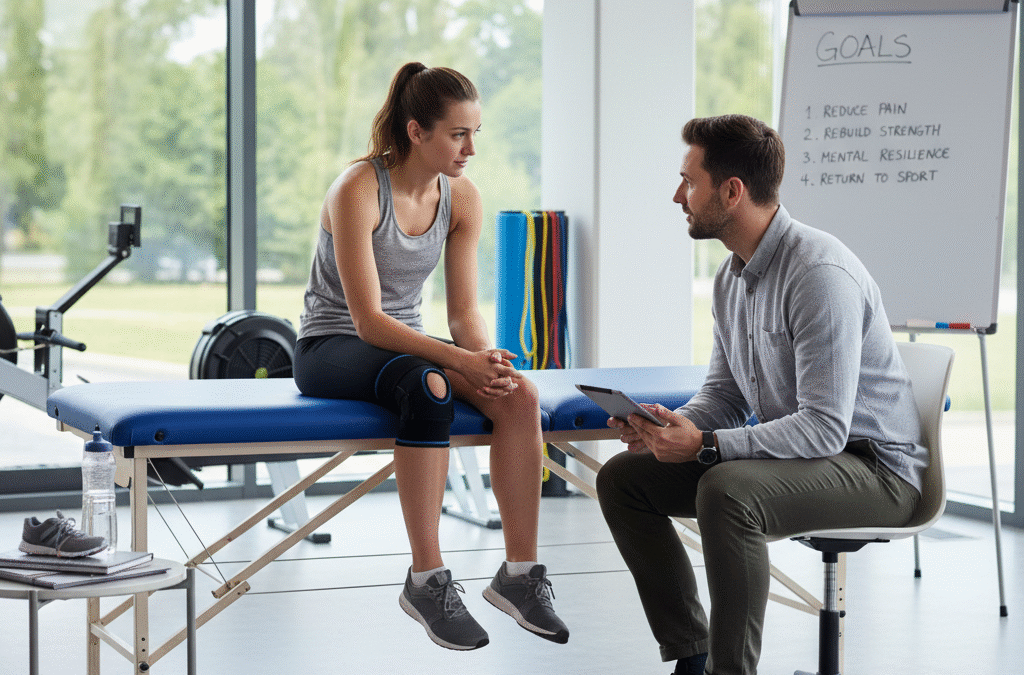
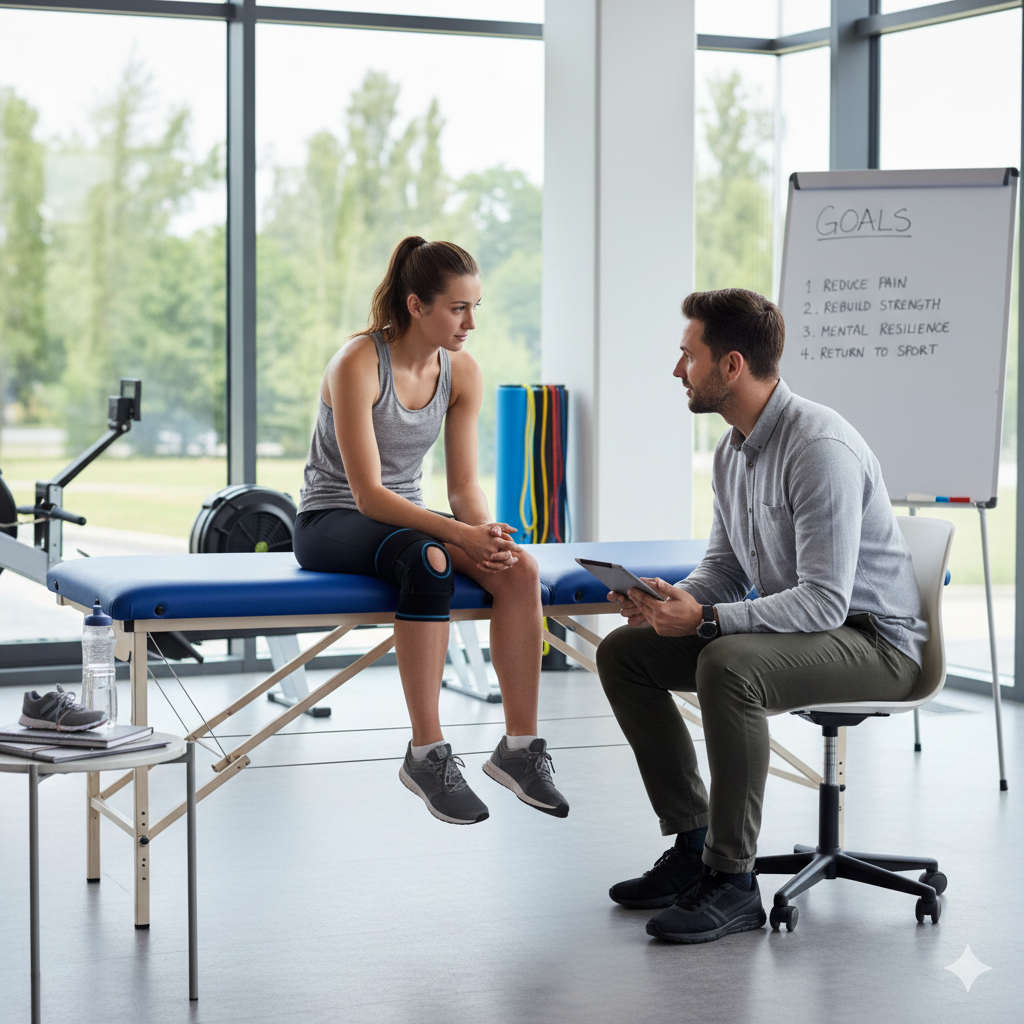
For decades, sports injury rehabilitation has rightly focused on the physical aspects of recovery. However, it is increasingly evident that addressing the psychological, social, and contextual factors is vital and inevitable for successful outcomes, especially for junior athletes.
An injury is more than just a physical problem; it threatens an athlete’s career and success and can deprive them of compensation, increasing life stress, and causing fear of re-injury, a sensation of loss, and negative emotions. To truly achieve optimal recovery and a safe return to competition, the athlete’s mind must heal alongside their body.
——————————————————————————–
Understanding the Psychological Impact of Injury
When an athlete sustains an injury, their reaction is heavily influenced by cognitive appraisal—their psychological assessment of the injury and their ability to cope with it.
The Appraisal Challenge
If an athlete views the injury as a potential threat or setback, this can lead to undesirable emotional states and behaviours. High performers, who often possess a strong athletic identity, may experience major feelings of loss and mood disturbance. This negative reaction, which can manifest as frustration or depression, can have devastating impacts on rehabilitation progress.
Adolescent female soccer players, for instance, are noted to have increased biopsychosocial injury risk and factors like being young, having limited injury experience, and experiencing negative emotion or isolation are related to less successful rehabilitation outcomes.
Sport psychology helps transition the athlete from viewing the injury as a loss or threat to seeing it as a challenge to be overcome on their personal journey.
Stages of Reaction
Psychological models, such as the affective cycle of injury, suggest athletes may pass through phases like:
1. Denial: Refusing to acknowledge the severity or consequences of the injury.
2. Distress: Experiencing negative emotions like anxiety, depression, or anger.
3. Determined Coping: Overcoming passive attitudes, evaluating resources, setting realistic goals, and maintaining commitment to the programme.
While distress is often adaptive in the early stages as it allows a relationship built on trust to form with medical staff, persistent denial requires psychological intervention. Determined coping is the most functional attitude for successful rehabilitation.
Core Psychological Interventions for Rehabilitation Success
A variety of psychological interventions can be used to enhance motivation, manage emotions, and speed up recovery.
1. Goal Setting: This is one of the most important and required interventions. Setting specific, measurable, realistic, stimulating, and time-based goals enhances commitment and motivation. It is crucial that goals are viewed as flexible to prevent frustration from unexpected adjustments. Moreover, aiming for mastery approach goals (improving skills and knowledge) is recommended over mastery avoidance goals, which are associated with burnout.
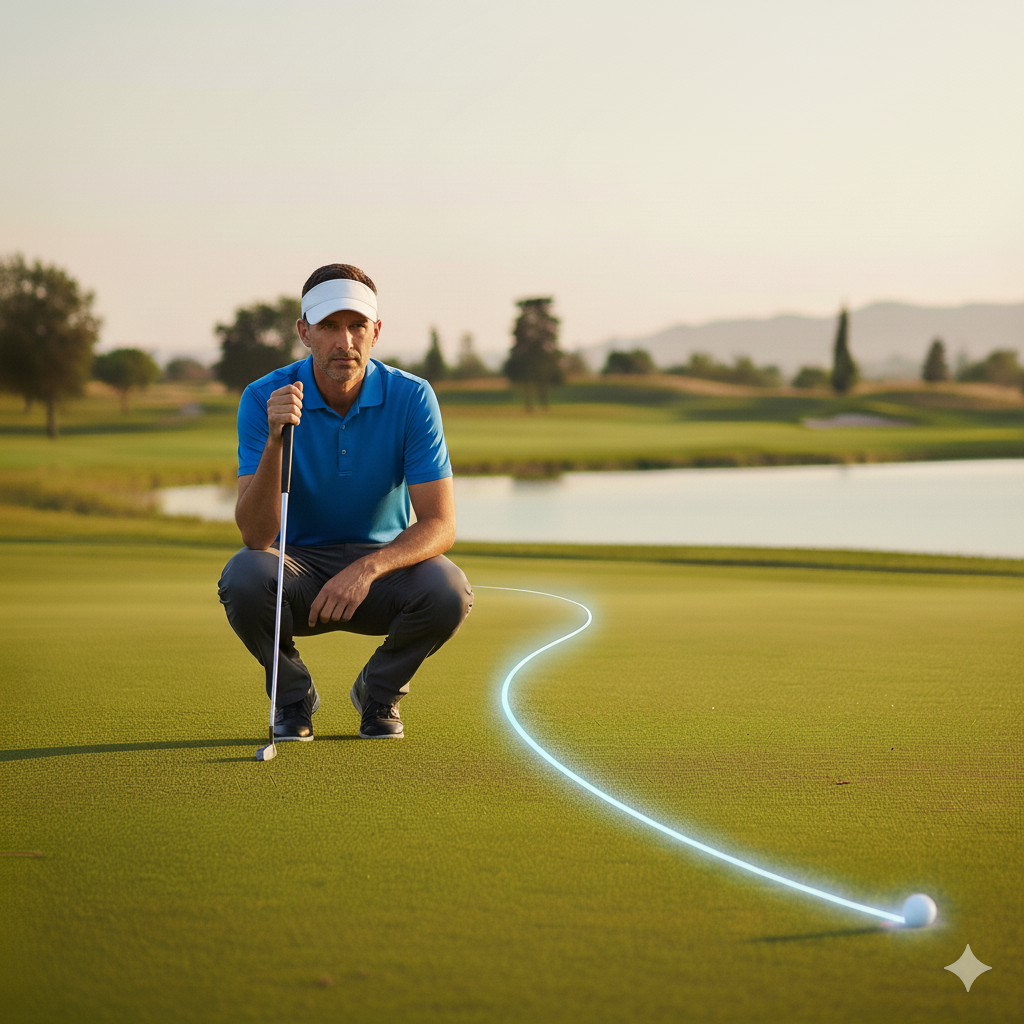
2. Imagery and Visualisation: Athletes often lose the habit of mental imagery during rehabilitation. Visualisation training, which involves mentally reproducing movements or competition scenarios, helps maintain individual skills and tactical sharpness. Imagery for rehabilitation can also manage anxiety and pain by coupling positive visuals with relaxation strategies. This technique needs to be highly tailored to the individual and their specific phase of recovery.
3. Educational Interventions: Medical staff providing an anatomical description of the injury, a recovery timetable, and information on anticipated emotions (like frustration) is vital in the early stages. Education helps athletes view the situation realistically, reducing anxiety and depression, and fostering determined coping. Athletes should also learn to differentiate between negative injury pain and positive rehabilitation pain.
4. Self-Talk and Cognitive Restructuring: This helps athletes recognize and change negative thoughts into positive affirmations, such as, “I’m getting healthier and stronger every day”. This intervention is helpful in reducing concerns.
The Role of Social Support and the Player-Parent Dyad
Psychological recovery doesn’t happen in a vacuum; social and contextual factors significantly influence the process. Injured athletes often feel a sense of isolation.
Social support interventions are based on the premise that increased support reduces negative psychological or physical symptoms by enhancing coping strategies. Social support is the most well-evidenced mechanism for managing stress related to sports injuries.
• Sources of Support: Support can come from family, friends, coaches, teammates, and medical staff.
• Types of Support: Different types of support have different effects. Emotional support reduces depression, while informational support reduces anxiety and increases self-confidence.
• The Parent-Player Connection: Parents are uniquely positioned to provide specific types and quantities of support, especially for elite female youth football players. For these athletes, parents provided tangible and informational support to continue player development. Examples include fathers helping explain physio instructions or providing reassurance based on their own previous sporting experience, which is highly valued by the athlete. Mothers often provide essential emotional support, sensing when the athlete needs a different type of connection, such as a hug, during moments of devastation.
The concept of dyadic flexibility—where parents learn when, where, and how to provide different types of social support—is important for enhancing the quality of the parent-player relationship, leading to adaptive rehabilitation expectations and compliance.
Conclusion
The ultimate objective of integrating psychology into rehabilitation is to help athletes develop coping skills that foster healthy stress management, contributing to athletic growth and injury prevention. By proactively addressing the athlete’s cognitive appraisals, emotional responses, and social environment through targeted interventions like goal setting, imagery, and social support training, we provide the inside edge necessary for a determined, successful, and confident return to competition.